
THE INTERVIEW
Liza Al Sady is recalibrating our nervous systems for modern life
There is always so much to worry about, from collapsing economic systems to climate change, and not to mention the social media burnout from following it all. Compared to our ancestors, our nervous systems are more fraught than ever with the perils of modern life. When certain stressors and high octane lifestyles start to affecting our mental health, our nervous system can trap tension inside of the physical body and mind. Liza Al Sady knows this only too well from her own experience with emotional and physical fatigue, a stage that set her on a journey of somatic release, changing her life and eventually opening We The Conscious- the UK’s first dedicated breathwork studio in East London.
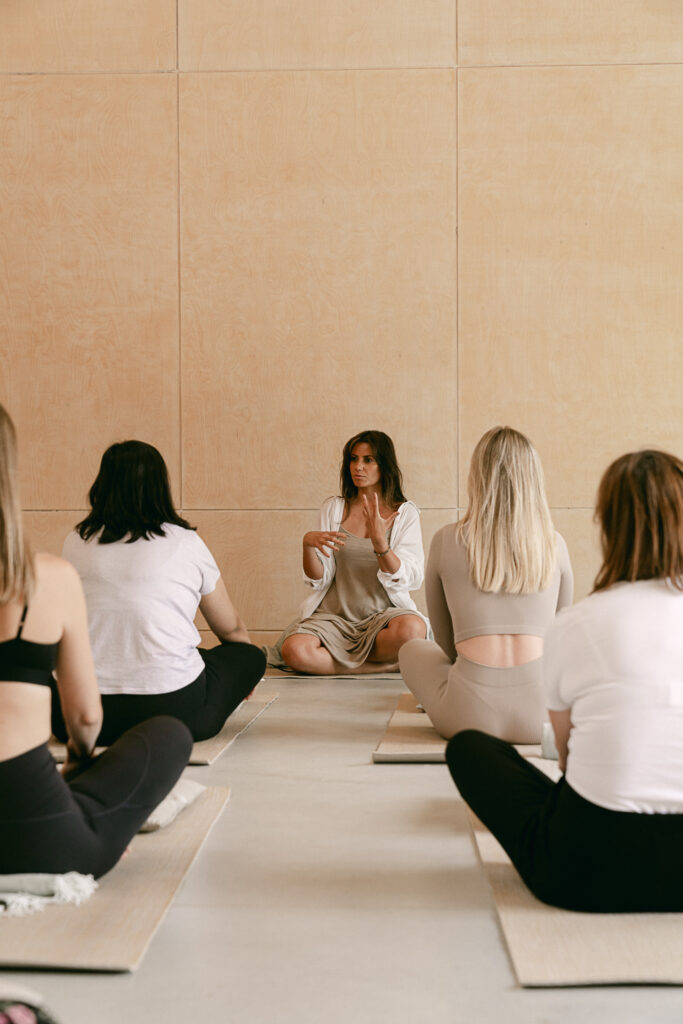
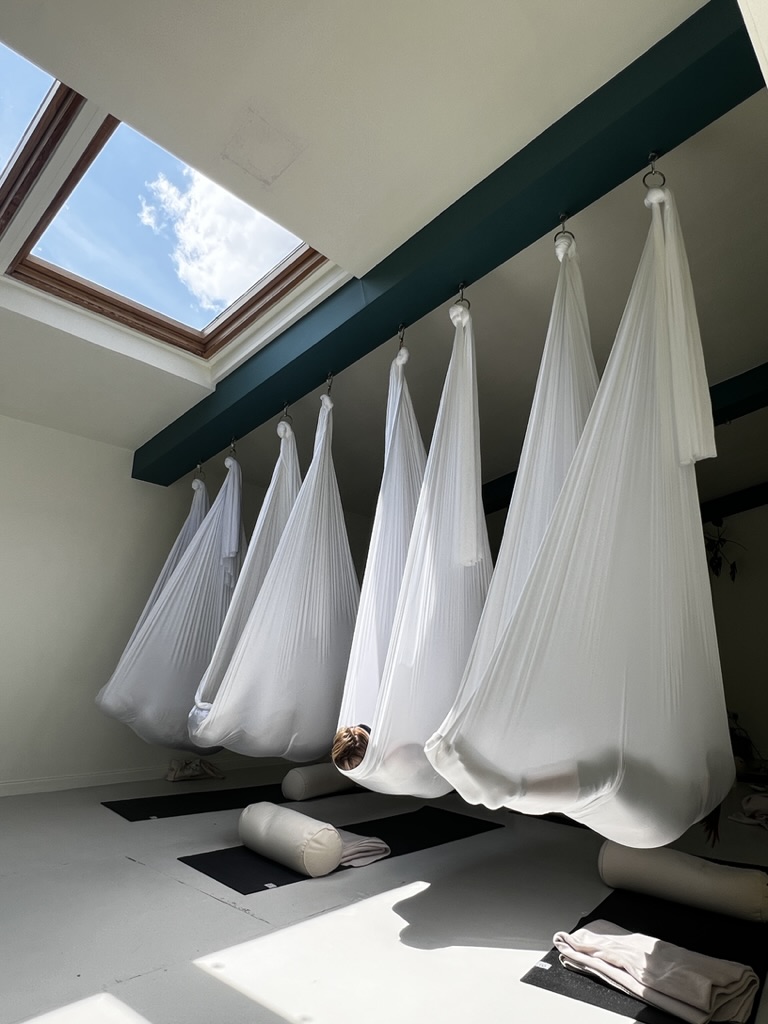
It’s hard to put somatic release into words because it’s one of those practices that can result in a full mind/ body transformational ‘do-over’ that feels different for everyone. Uncompromising as it is- and more often uncomfortable- this form of practice can be one of the most freeing things your body and mind could ever experience. Liza is spearheading a movement helping people to release and unwind through her We The Conscious® Breathwork Method, each session an invitation to slow and soften back into the body at her calming studio space (complete with hammocks for a zero gravity experience). This somatic unwinding is a reminder to get back in touch with our minds and bodies for a full nervous system reset. Here, Liza shares more on her bespoke offerings, insights on self care and how the body stores energy.
You have developed We The Conscious® Breathwork Method. What makes your approach distinct from other breathwork modalities?
At the heart of the We The Conscious® Method is a deep connection to the world around us. I believe that connecting to our senses guides us into a deeper exploration of who we are and how we experience life.
Our stories are imprinted in our bodies through our senses. Scent can transport us to a different time, place, or story. Sound and music have the power to shift our emotional state, while the frequency of a voice can carry generations of unspoken truth. Our eyes are constantly scanning the world around us, helping us navigate between what we perceive as safe and what we see as danger. Touch has a powerful way of reminding us of connection and of the softness and rigidity of our internal world.
Each sense becomes a form of reflection and release, a way of communicating with the parts of ourselves that words alone cannot reach. It is also how our body creates safety, constantly sending and receiving messages through sensory awareness.
When developing the method, I wanted clients to experience the magnitude of not only the breath but also the complexity of how connecting to our senses can open up portals to seeing beyond what we can see. Integrating psychosomatics and bodywork allows us to understand how emotion lives in the body and how physical expression supports emotional release and regulation.
It is a multidimensional method created with care and years of deep learning about the intricate nature of being human. Every detail has been intentionally designed, from the space itself to the layout of the speakers and the words spoken throughout the session.
Breathwork is an ancient technology that exists across cultures, dating back through indigenous culture. How do you reconcile teaching these practices in Hackney in 2025, when modern life is largely disconnected from those lineages?
By teaching with respect, not ownership. Breathwork does not belong to anyone. It belongs to humanity. Every culture has had a relationship with the breath in its own form, and I see my role as creating a bridge between that ancient wisdom and modern life. In Hackney, people are craving real connection. My work is about bringing the breath back into everyday life, not to replace tradition but to remind people that this wisdom has always lived within them.
When someone comes to your studio in full burnout, still in their corporate armour, can you see it in their breath pattern before they even speak?
Always. You can feel it before you even look at their breath. The tension in their jaw, the way their shoulders sit, how they hold their chest or avoid eye contact all tell a story. Then the breath confirms it. It is shallow, tight, almost protective. The body speaks before the mind ever does.
Every detail in your studio feels intentional, from the quadraphonic sound, hammock pods, natural light and high ceilings. How did you go about designing the space?
Community and connection were at the front of my mind when I was planning the space. I wanted it to be open and accessible to everyone, a place that meets people wherever they are in their own season and journey of life. It comes back to our method of how we can use our senses to bring safety into the body.
Sound was a huge part of that. Even down to the placement of the speakers, I wanted people to feel the sound, not just hear it. The studio was designed to connect us to the full spectrum of our human experience, with practices that explore not just the physical but deeper emotional and sensory states.
My father was an architect, and for the short period I was lucky enough to live with him, our home was a transformation of beauty. Later in life, I qualified as a primary school teacher in Australia and majored in children and the creative arts. I went on to immerse myself in a philosophy called Reggio Emilia, which was based on ‘the hundred languages of children’. Part of this philosophy is that the environment is your third teacher, and that is something that has always stayed with me.
I wanted people to feel comfortable and safe as soon as they stepped through the doors. Our walls were intentionally created to hold art from local artists, bringing wonder and joy to everyone who comes in. I also wanted people to stay back and come early, not to feel like they need to leave a 60 minute session. Books, art, oracle cards, and open space to hang are all part of this intention to bring people together and create community.
What are the markers that tell you someone is moving toward breakthrough versus retraumatisation?
Safety. Presence. Breath. When someone is in their body, feeling rather than reliving, that is where transformation happens. Their breath stays connected, their awareness is here, not lost in the past.
Retraumatisation happens when the body shuts down, when the breath becomes erratic or disconnected. Breakthrough is when the emotion moves through instead of taking over. Emotion is energy in motion. When it is felt safely, it can finally move and release. You can feel that shift in the room, the moment the body stops resisting and starts to trust what is unfolding.
What was the exact moment you realised that success, as you had defined it for 15 years, was negatively impacting your wellbeing?
When I woke up one day after a two day bender, having had an awful week at work, my voice gone, no food in my body for over twenty-four hours, and I caught a glance of myself in the mirror. I did not recognise the person staring back.
That moment hit hard. I had spent years chasing success, climbing the ladder, drinking and partying my way through the exhaustion, convincing myself I was thriving. But underneath it all, I was running from myself. That morning was the first time I realised how disconnected I had become, from my body, from my breath, and from any sense of peace. It was the beginning of everything changing.
Can you describe what you found when you touched back in with your inner self through the breath?
Safety in stillness. The courage that had always been there. The power to use my breath to change, release, and reconnect with who I truly am.
Five years from now, what do you hope has shifted in how people relate to their inner worlds?
To realise that our past experiences never go away. They live within us and shape how we move through life. It is the gateway to a universe far more powerful than we have been led to believe.
Breathwork is incredibly potent- it shifts pH levels, alters CO2 tolerance, activates the vagus nerve, changes brainwave states, releases DMT, affects mitochondrial function and more. If someone came to you wanting to “biohack” their nervous system, what would you tell them breathwork can do that no supplement or device can?
No supplement or device can teach you to feel. Breathwork brings you into direct relationship with your body, your patterns, your stories, your truth. It is not just about shifting chemistry or activating the vagus nerve. It is about awareness. The breath shows you where you are holding tension, where you disconnect, where you need to soften. It gives you agency. You become the technology.
Share your top five self care non-negotiables
Be compassionate with yourself. Life is hard, and we ebb and flow.
Conscious Connected Breathwork and Neo Emotional Release at We The Conscious Studio. To come home to my body, meet what is hidden, and let it move.
Restorative hammocks at We The Conscious Studio. Nothing calms my system like being held mid air, fully supported and suspended in stillness.
Co regulate with people you love. Spend time with friends and family who help your body feel safe.
Phone in another room when I sleep. Protect your nervous system. Let your mind and body switch off.
© Higher Self Experience
