The Future of Wellness: Intersection of tech and ritual. With technology developing alongside AI to dig deep into DNA records, we’ve come a long way since measuring the basic health metrics.
As the wellness world continues to evolve at speed, we’re witnessing a remarkable surge in technologies designed to support personal health and well-being. From continuous glucose monitors (CGMs) that provide real-time insights into our internal rhythms, to hydrogen water praised for its potential to boost energy and cognitive function with the touch of a filter button, the tools at our fingertips are becoming more precise, more personal and more powerful.
Devices like Sensate, which use infrasonic frequencies and therapeutic soundscapes to soothe the nervous system reflect a growing trend: technology doesn’t just track our bodies, it can help shift our state of being. Technology has advanced itself using the laws of science and nature to promote a whole host of physical and mental benefits- brands like Bon Charge, HigherDOSE and CELLER8 design PEMF products- a coveted form of electromagnetic-based treatment with a whole host of physical benefits such as pain relief, muscle recovery and more. Chroma developed their D-Light to combat SAD (Seasonal Affective Disorder) using natural Vitamin D synthesis.
With innovations like these becoming more common in both clinical settings and homes, the wellness landscape is quickly adapting to meet the demand. Health optimisation is no longer a niche practice; wearables and data-driven insights have become part of daily life for millions with brands like Oura becoming household products. At the same time, global trust in health tech is growing- according to a 2023 report from Statista, around 60% of consumers worldwide feel comfortable sharing their health data with companies tracking wellness metrics.
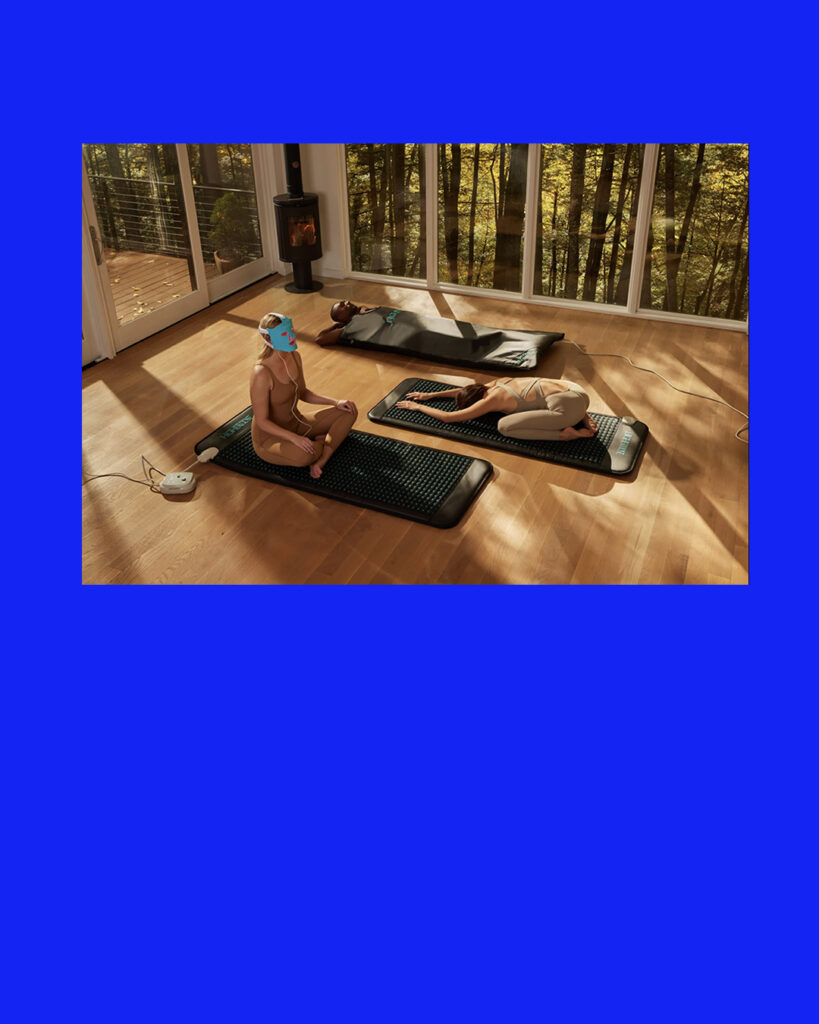
Above: HigherDOSE Infared PEMF mats and Infared Sauna Blanket
The possibilities for advancing the wellness landscape are exponential, but the true excitement is not just the technology itself- it’s the way traditional wisdom is being integrated alongside it. Rather than viewing ancient healing systems as outdated and in need of an upgrade, the wellness world is increasingly recognising them as time-tested, deeply intelligent frameworks.
Brands like Healy are exploring this synergy. Their wearable device promotes balance and relaxation using subtle energetic techniques like resonance scans, frequency healing, and bioenergetic balancing- all rooted in age-old practices, now delivered through modern design. BioMat® combine Negative Ions and Infrared Rays to mimic the beneficial Negative Ion levels found in nature and uses frequencies aligned with the human body. Ritual and innovation co-exist in their branding- each enhancing the other- with models shown meditating or practicing yoga on their mats. This new wave of wellness tech doesn’t see old and new as opposites, but rather invites them into the conversation.
With technology developing alongside AI to dig deep into DNA records, we’ve come a long way since measuring the basic health metrics. Combined with the fact that today’s consumer may feel called to share more about their personal health data online if it means they are benefitting from the outcome, means tech has more of an extended reach than ever before. As technology becomes more refined and our understanding of well-being more nuanced, perhaps the future of wellness isn’t about choosing between data and tradition, but learning how to let both guide us forward for a more integrated, intentional way of living.