
Recalibrating rest: In conversation with Dr Alka Patel
An expert insight series for Sleep Awareness Month 2026, exploring the science and optimisation of sleep for improved health and vitality
Sleep Awareness Month offers a chance to deepen our knowledge of the body and the concept of rest. We are surrounded by so many ways to track our health metrics, adjusting our exercise and eating habits accordingly; however, sleep hygiene is often overlooked. Late nights, having caffeine late in the day or scrolling phones during the night are commonplace, but there is so much more that can affect sleep health, from young children waking in the night to sleeping in a noisy home. All these factors mean that sleep disorders and other related issues are on the rise, leaving our health in a negative slump. Nine out of ten people in the UK are currently experiencing sleep issues, and eighty distinct primary sleep disorders affect around a third of the general population in Western Europe. Everyone knows sleep is important but one fundamental truth remains: most of us aren’t getting enough of it, or at least not at a quality level.
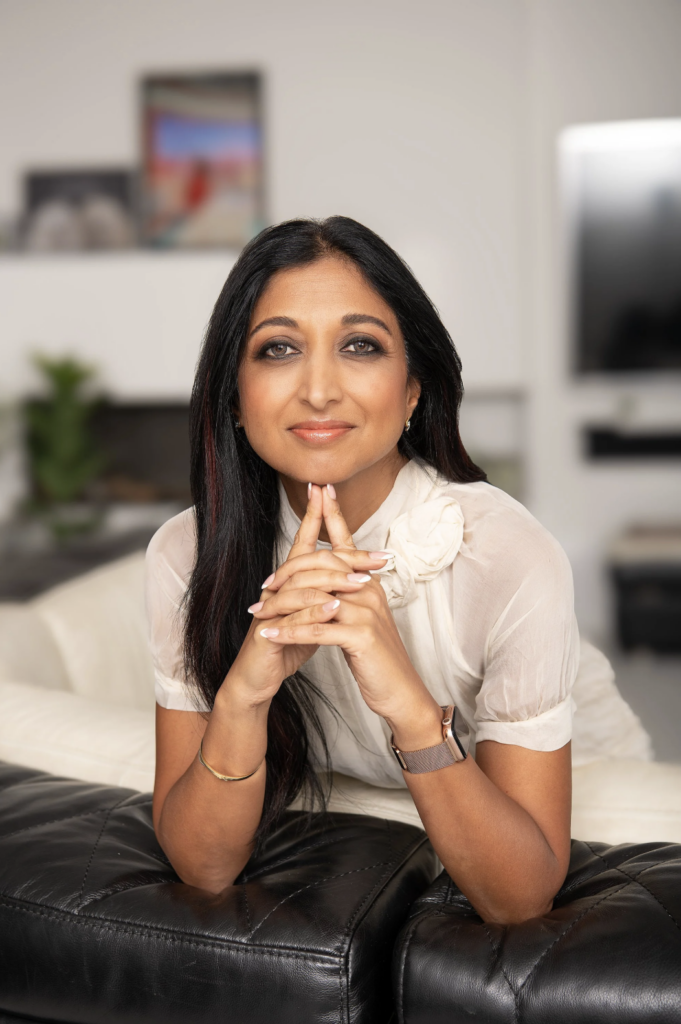
During the course of this month, we’ll be inviting health and wellness experts to explore and discuss the topic of sleep. We will discuss accessible tips and habits to enforce better sleep, and pick apart some of the common issues that impact our ability to experience deep rest. Longevity and Lifestyle Medicine Doctor Dr Alka Patel debuts this series and shares more about her approach to resetting perspective to form better sleep habits. Dr Alka holds over thirty years of medical experience, working to help her people live longer, healthier and stronger lives through cellular health and reverse ageing. She’s an award-winning speaker, including TEDx, and creator of the Million Hour Method, using data and devices to make decisions with precision. From harnessing positive sleep rituals using daytime sunlight and breathwork, to breaking down the exact science behind sleep, read Dr Alka’s expert advice below as we highlight Sleep Awareness Month.

Was there a turning point in your own journey when sleep stopped being about “catching up” and became something you recognised as a true pillar of longevity?
It was the year I ended up hospitalised with burnout. I was a GP Partner, juggling clinics, raising a young family. I told myself four hours was “fine.” I believed my body could compensate.It couldn’t. For me, that hit was physical. My kidneys shutting down, my liver not working, waking up in a hospital bed, not knowing if I’d see my children the next day. That hit me hard. That was when sleep stopped being negotiable.
What changed for me was understanding that sleep is a lifeline. It’s both recovery from the day and preparation for the next day. Research from Van Dongen’s landmark study at the University of Pennsylvania showed that people restricted to six hours per night for two weeks performed cognitively as poorly as those who stayed awake for 24 hours straight. Subjectively, they felt they were adapting. Objectively, they were deteriorating. Sleep is not a bank account you dip into and repay later. It’s a biological rhythm. When you break rhythm, you break repair. Now I treat sleep like oxygen. Essential. Non-negotiable. My diary bends around it, not the other way round.
You’ve spent decades studying the body’s deepest intelligence. How do you see sleep shaping cognitive vitality, hormonal resilience and how we age?
If you’ve ever walked into a room and forgotten why, snapped at someone you love or felt your energy crash mid-afternoon then sleep is usually part of that story. Sleep is where ageing either accelerates or decelerates. I see this very clearly through the biological age testing I do. Two people can be the same chronological age, but the one sleeping consistently well almost always shows a younger biological profile.
During deep non-REM sleep, growth hormone surges. That’s your repair signal. During slow-wave sleep, the brain activates its glymphatic system, clearing metabolic waste. Even one night of total sleep deprivation has been shown to increase beta-amyloid burden in the brain. That’s the same protein associated with cognitive decline. Dementia. Alzheimer’s. On the metabolic side, one week of restricted sleep significantly reduces insulin sensitivity. Less sleep means more evening cortisol, more cravings, more fat storage around your organs. Sleep repairs, regulates and recalibrates, and when you measure it properly, you can see that recalibration in real numbers.
After 25 years in medicine, what’s the most persistent myth you see your clients holding onto?
“I don’t need much sleep.” It’s usually said with pride. I see high performers treat short sleep like a badge of honour. Early starts. Late emails. The idea that exhaustion equals ambition. And I understand it as I lived it for a while. But I ask them: if you’re irritable, reliant on caffeine, craving sugar by 3pm and forgetting names you used to remember… is that really peak performance?
Large population studies show a U-shaped relationship between sleep duration and mortality, with around seven to eight hours associated with lowest risk. Chronic short sleep increases cardiovascular and metabolic risk. When I run biological age testing, the “I only need five hours” clients often show accelerated inflammatory markers. They’re coping, but their biology is compensating. The real flex isn’t how little you sleep, it’s how well you recover.
“Sleep is not a bank account you dip into and repay later. It’s a biological rhythm. When you break rhythm, you break repair.”- Dr Alka Patel
When people clock seven or eight hours but still wake depleted. What are the telltale signs that sleep is about quality too, not just duration?
Hours matter. But what happens within those hours matters too.When someone tells me they’re getting “a solid seven or eight.” But they wake groggy. They need coffee before conversation. They crave sugar. This is not a duration problem, it’s a quality problem.
When I look under the surface, I often find:
Night-time cortisol spikes keeping the nervous system alert
• Low or delayed melatonin, so the body doesn’t fully enter deep repair
• Elevated overnight heart rate, a sign the body is still “on duty”
• Suppressed deep sleep stages
• Night-time glucose highs and dips that fragment the second half of the night
I frequently measure melatonin and see delayed onset. Someone is in bed at 10.30pm, but biologically their brain still thinks it’s daytime. Their internal clock hasn’t shifted into repair mode.
Gut health plays a role too. When I run comprehensive stool testing, I often see microbial imbalance in those struggling with sleep. The gut produces and regulates serotonin, which is a precursor to melatonin. If the gut is inflamed or dysregulated, the sleep signal weakens.
Sleep is not just about getting through tomorrow, it’s about protecting your long game.

Let’s talk about circadian alignment. Beyond buzzwords, what does that actually look like woven into someone’s day?
Circadian alignment doesn’t mean waking at 5am. It means understanding when your brain and body are biologically primed to wake, focus, eat, move and sleep.
At the centre of it all sits a tiny cluster of neurons in the brain called the suprachiasmatic nucleus. That’s your master clock. It is governed primarily by light. But it doesn’t work alone. Every organ, every cell runs on a clock. When those clocks are synchronised, your body feels safe. When they’re misaligned, it behaves as if under threat.
Some people are morning larks and others are night owls. Chronotype is partly genetic. You can test it. Forcing everyone into a 9–5 performance window ignores biological diversity. Alignment is about knowing your natural peaks of focus and creativity, protecting consistency within your own rhythm, and respecting your 90-minute ultradian productivity cycles. That misalignment is measurable, and it accelerates ageing when chronic.
Do you use sleep tech? How do you make it meaningful?
Yes. I wear an Oura ring. I sleep on an Eight Sleep pod. I use blue light blockers. I use vagal nerve devices. However I don’t chase scores, I look for patterns. If my HRV drops or resting heart rate rises, I get curious. Travel? Late meals? Emotional load?
Sleep tech isn’t just rings. A CGM ( continuous glucose monitor) can reveal glucose dips waking you at night. A home monitor can detect sleep apnoea. Even mouth taping can improve nasal breathing.
My practice is built on my Million Hour Method: Data. Devices. Decisions. The body sends data, devices translate it and decisions change trajectory. If a wearable suggests poor recovery, I may assess cortisol rhythm, melatonin timing, or micronutrient status. Because sometimes the issue isn’t “a bad sleep routine.” It’s magnesium insufficiency. Or a raised cortisol curve. Or unstable glucose.
That said, I’m careful. Not everyone should track everything all the time. Some people become hyper-fixated on optimisation and lose the very ease sleep requires. Technology should create clarity, not compulsion. I believe in blending transformative technology with innate intuition. Let the tech support your body’s wisdom. Not override it.
You’re known for “data drives determination.” How do you balance metrics with body wisdom?
I always begin with two questions- What do the numbers say? What does your body say? because here’s the uncomfortable truth: most people already know what they “should” do. Sleep earlier. Drink less. Modulate stress. Eat better. Move more. But knowledge does not equal action.
We live in constant cognitive noise. Notifications. Deadlines. Family demands. Internal pressure. In that noise, we miss the signals. Or we feel them and override them. You feel tired and push through, you wake at 3am and scroll and you feel wired and call it ambition. I see a lot of people who say they want to sleep better… but then continue to self-sabotage. The midnight emails. The Netflix binge-watching. The social media doom-scrolling. But numbers do something powerful. Data interrupts denial. If a client tells me they’re sleeping “fine” but their HRV is suppressed, their resting heart rate elevated, and their cortisol curve inverted, we have evidence. If their biological age is running older than their chronological age, that’s not opinion, it’s information.
You can argue with feelings, rationalise habits but you can’t negotiate with data. Numbers nudge. They create a pause between behaviour and consequence. But here’s the balance; if a client’s sleep score looks excellent yet they feel exhausted, I don’t dismiss their experience. I go deeper. Often we uncover micronutrient insufficiencies. Magnesium, B vitamins, mitochondrial cofactors. Sometimes iron. Sometimes unstable glucose overnight.
The right depth of testing frequently reveals why someone feels depleted despite “adequate” sleep duration.Metrics show patterns. Symptoms tell stories. If you rely only on feelings, you risk blind spots. If you rely only on metrics, you risk disconnection. True longevity medicine holds both. Data provides direction, wisdom provides context and determination drives change- that’s the bridge.
Because the goal isn’t to become obsessed with numbers. It’s to use numbers as a mirror. And then act. And when you act consistently, you don’t just improve sleep. You alter your life’s trajectory.
What’s the first thing you recommend if someone is burnt out, but wired and exhausted?
Three words: Recognise. Respond. Recover. Recognise the signs. The 3am wake-ups. The caffeine dependency. The wired evenings. Respond simply. Anchor your wake time. Get morning light. Create a wind-down boundary. Recover by connecting to your rhythm. It’s not passive. It’s purposeful biological repair.
When rhythm stabilises, recovery follows. Deeper sleep. Steadier energy. Better emotional regulation. Recovery is what protects your brain, your hormones, and ultimately your longevity. Burnout is not a personality flaw. It’s a recovery deficit. And once you recognise that, everything changes.
What are you hopeful about in sleep science? And what do you wish people would stop dismissing?
What excites me most right now is that sleep science is becoming more precise and chronobiology is having its long overdue moment. Timing matters. We’re learning that sleep regularity is as important as duration. And beyond sleep, chronobiology is showing us that every organ runs on a clock. The liver metabolises differently depending on time of day. The immune system responds differently. Even ageing itself follows circadian patterns. That opens the door to more personalised medicine, aligning treatment and lifestyle with biological timing rather than arbitrary schedules.
What I’d love is to see organisations respect chronotype more. Not everyone peaks at 9am. Some hit brilliance at 7am. Others at 10pm. That diversity is biological, not behavioural. I am also looking forward to seeing a world where we revolve around the night, not just the day. Where sleep is protected first, and productivity wraps around it. Where staying up later to get more done isn’t seen as commitment, but compromise.
And I wish people would stop dismissing rest. We live in a culture that glorifies depletion. We celebrate hustle, exhaustion, and overextension as proof of commitment. But biologically, chronic overstimulation is a stress signal. It drives inflammation, impairs glucose control, fragments sleep and accelerates ageing. But when you protect your rest, you protect your brain, your hormones, your metabolic health and your longevity.
If someone wanted to radically improve sleep without buying anything, what would move the needle most?
Honesty. If you say you want to improve your sleep, you have to mean it. Most people don’t have a sleep problem. They have a priority problem. They say sleep matters… and then answer emails at 10.47pm. They say they’re exhausted… and scroll for “just five minutes” in bed. They say they want energy… and treat bedtime like a suggestion rather than a deadline. Sleep doesn’t improve because you download an app. It improves when you draw a boundary.
Honesty looks like this: What time do you actually go to bed consistently? How much alcohol are you really drinking? How late is your last meal? How often are you overriding tiredness? You have to be honest about your habits and what you are ready to change.
What are 3 easy and accessible tips our readers could do today?
From my time-based biohacks do this:
1–10 Sunshine Sync
Step outside into the morning light for one minute and take 10seconds to set your purpose for the day.
6–60 Breathflow Boost
In preparation for sleep, slow your breathing rate down to 6 breaths a minute for 6o seconds
8–80 Screenless Sleep Rule
Aim for eight hours in bed and give yourself eighty minutes screen-free before sleep.
Simple. And when measured and tracked, especially through biological age testing, they become even more powerful longevity interventions. And here’s the real question: if sleep influences how fast you age, how sharp you think, how long you live and how happy you are… are you treating it as optional? Or are you building your Million Hour Life on it?

© Higher Self Experience
